
finger-touch-on-tablet-computer-with-stock-market

Cloud Modernization PoC Demonstrates Potential for 90% Cost Savings in Banking

Setting the stage for a future-proof digital transformation and innovation in the banking sector

The Overview

Banking evolves fast, yet outdated infrastructure often holds institutions back. For one leading European bank, the reality was challenging, as 95% of its IT budget was spent just to keep systems running, leaving little space for innovation or growth. With rising operational costs and an aging tech stack, modernization soon became a necessity.

The bank set out to prove that cloud migration could fundamentally reshape its operations, reduce costs, and create a more scalable foundation for the future. Together with the Bank’s Technology Center and Microsoft, Zitec migrated three critical applications: its core banking, mobile banking, and e-banking, into a containerized Azure Kubernetes environment. The move allowed the bank to make way for more efficiencies, improved resilience, and demonstrated the transformational potential of cloud-first banking.

Beyond the technology, the real shift was strategic. By reducing reliance on legacy systems, the bank could free up resources for product development, accelerate digital transformation, and set the groundwork for long-term innovation. With a modern, cloud-native infrastructure in place, it now has the agility to adapt, scale, and meet the demands of an evolving financial landscape.

Banking is an industry often defined by its speed and pace of change. Here, legacy infrastructure that fails to keep up is a common challenge. Hence, the leading European bank sought out to prove that cloud modernization could fundamentally change how they operate. With 95% of their annual IT budget locked in just to keep the lights on, innovation had taken a backseat.

Alongside our teams at Zitec, they set to cut operational costs by up to 90%, free up resources for product development, and set the stage for scalable banking services.

Together with the Bank’s Technology Center and Microsoft, we tackled this head-on. We migrated three core applications: core banking, mobile banking, and e-banking, to a containerized Azure Kubernetes infrastructure to meet the imperative for cost efficiency and resilience.

The Context

To successfully undergo digital transformation, financial institutions must embark on a comprehensive modernization journey encompassing both applications and infrastructure. This begins with assessing legacy systems and developing a strategic roadmap that aligns technological upgrades with business objectives.

For established players, especially those in international banking groups, transformation can be slow, making strategic partnerships with industry experts essential. These collaborations provide valuable insights and technological solutions to modernize legacy systems while ensuring a scalable and future-proof foundation for growth.

“We were allocating 95% of our total annual budget solely to maintaining infrastructure, with very little left to the development of new products. This high infrastructure cost limited our ability to innovate. The goal became to reduce these operational costs by up to 90%, freeing up more budget for innovative projects.”

the CTO of the Bank’s Technology Center

The Challenges

Understanding the bank’s core infrastructure was the first step. Over the initial two months, we mapped out critical systems, documented dependencies, and identified integration points to ensure a smooth transition. With multiple legacy applications running on outdated configurations, the challenge was to migrate without disrupting operations while making the system scalable for future growth.

The project had a tight deadline of under a year, adding pressure to an already complex environment. Many applications had limited documentation, requiring in-depth analysis to ensure compatibility with modern cloud platforms. Scalability and resilience were key priorities, not just for immediate improvements but for long-term digital transformation.

Collaboration was essential.In a highly regulated banking environment, every change needed to align with compliance requirements and internal teams. Beyond the technical work, keeping all stakeholders engaged and ensuring a unified modernization strategy was crucial to the project’s success.

The Solution

We developed a Proof of Concept (PoC) to migrate the bank’s core applications, including its core banking, e-banking, and mobile banking, to a containerized Azure Kubernetes (AKS) environment. This approach came with greater scalability, flexibility, and cost efficiency, as it would allow the bank to dynamically allocate resources and optimize system performance.

Azure’s infrastructure strengthened security and compliance, aligning with industry regulations while also boosting disaster recovery capabilities.

Kubernetes

Microsoft Azure Kubernetes Services Blueprint

The benefits of this approach are significant:

  • The transition from on-premises hardware to the cloud frees up resources for innovation and new product development while being highly cost-efficient. 

  • Containerization of banking applications sustains application performance across diverse environments, whether on-premises, in the cloud, or in hybrid setups. 

  • Coupled with DevOps practices, containerization allows banking institutions to deliver new features and updates faster while maintaining high-quality standards. 

  • From a security and compliance standpoint, containerization offers benefits such as immutable infrastructure, which reduces attack surfaces, and integration with security tools for vulnerability scanning and policy enforcement. 

  • Containers can support fine-grained monitoring and auditing to comply with industry regulations like PCI DSS or GDPR.
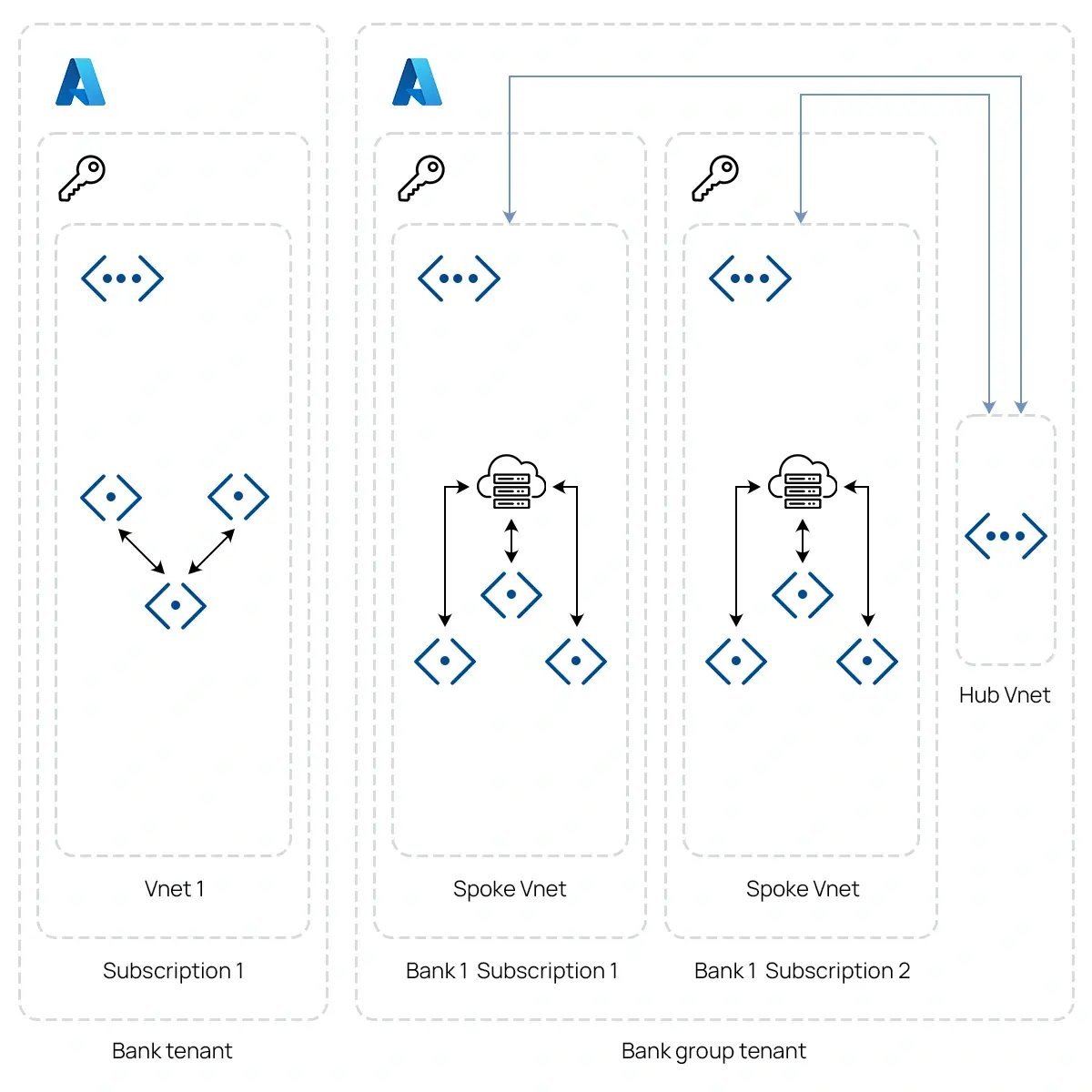
Microsoft Azure Kubernetes Services Blueprint

Zitec-CS-Azure


“We made the shift to containerization to enhance the efficiency of our infrastructure. This decision paved the way for launching this pilot project aimed at migrating key applications to containers. Our goal was to improve our scalability and accelerate the rollout of new products while ensuring that both our legacy and new applications remain fully functional and compatible as we transition to full digital transformation. Ultimately, we aimed to reduce the time required to develop new products by up to 50%. We were excited to have Zitec join us in this endeavor, as we were not just looking for a DevOps provider but a partner capable of delivering a customized software solution.”

CTO, the Bank’s Technology Center

 

The Process

The transformation started with an assessment of the bank’s legacy applications. The key focus areas included:

  • Containerization of banking services for seamless deployment across environments.

  • Microservices adoption for faster updates, easier fault isolation, and better performance.

  • CI/CD pipeline integration to automate deployments and reduce downtime.

  • Enhanced security through Azure-native tools, meeting PCI DSS and GDPR requirements.

The Results

This pilot successfully validated the Bank’s cloud strategy. Although initially deployed in a QA environment, this pilot’s success laid a solid foundation for future processes and marked a crucial milestone in the client’s path to full cloud adoption and digital modernization.

The solution also showcased how containerization could accelerate app deployment, allow for consistent releases, reduce operational overhead, and automate resource management. Ultimately, this approach improves scalability and security perspectives. It also demonstrated the potential to reduce product deployments time by up to 50% and lower operational costs by as much as 90%.

To sustain the transformation, we provided hands-on Kubernetes training for the bank’s IT teams.The program combined theory with hands-on training, allowing staff to deploy, manage, and optimize containerized applications. This strengthened the client’s digital capabilities while ensuring a sustainable path for integrating new technology.

Looking Ahead

For the future phases following this pilot, the Bank plans to continue with the extension of these cloud-based applications across its digital landscape. This groundwork positions the Bank’s Technology Center to expand cloud adoption over time and gradually phase out legacy systems as they shift to a modern, digital banking framework for the Bank.

By equipping the Bank’s technology center with a resilient, cloud-based environment, we helped position them to drive digital innovation, streamline operations, and ultimately deliver an outstanding customer experience, as the Bank itself moves toward a fully digital future, alongside Microsoft Azure.